Blog | 13.07.2026
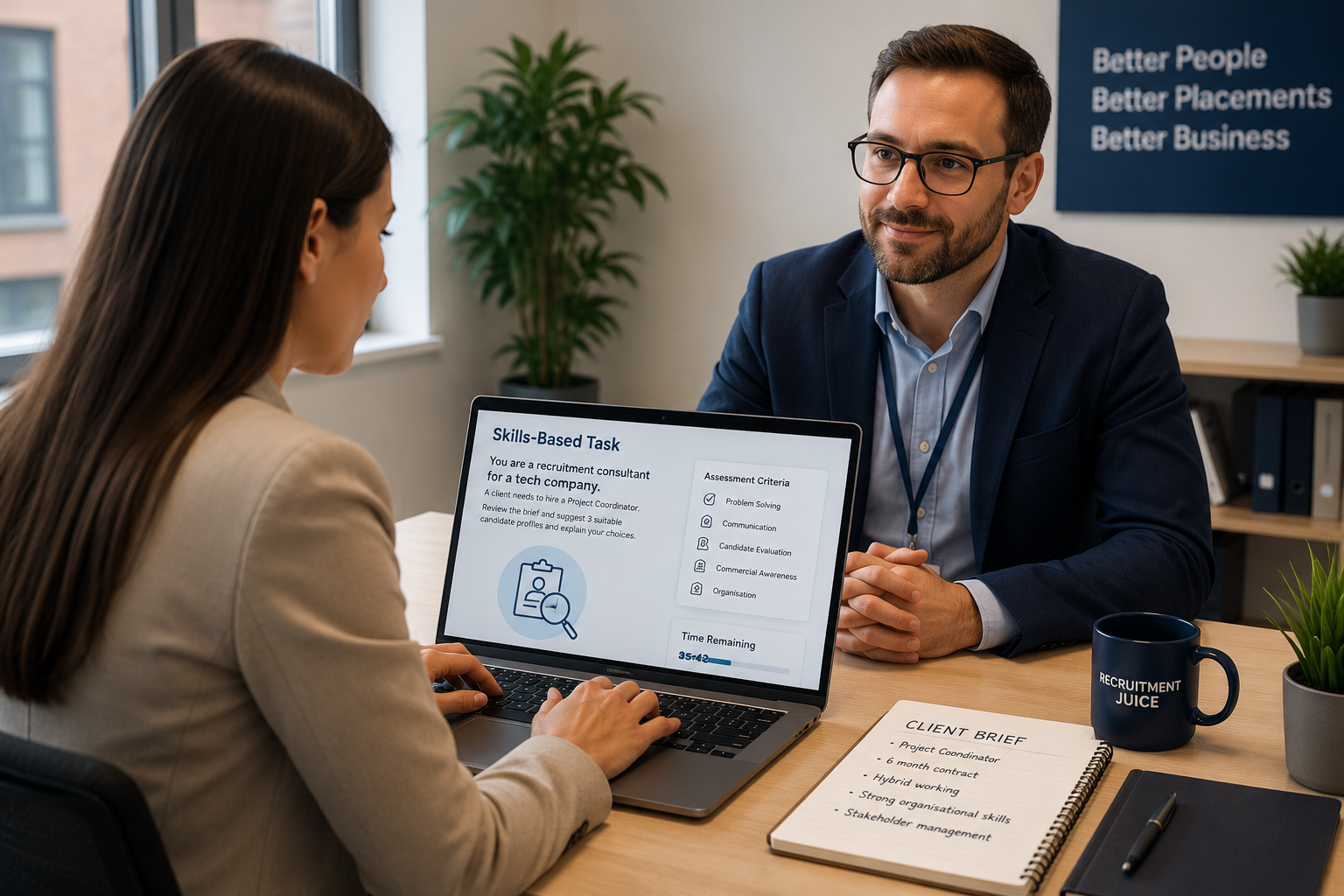
For years, employers relied heavily on qualifications, job titles and years of experience when hiring. Today, that approach is changing. Across the UK, more organisations are placing greater emphasis on what candidates can actually do rather than where they studied or the exact roles they've held. This shift towards skills-based hiring is helping employers widen talent pools, improve diversity and make better hiring decisions. For recruitment businesses, this presents both an opportunity and a challenge. Recruiters who can accurately identify, assess and present skills will become increasingly valuable to clients. Those who continue relying on traditional CV matching risk falling behind.
What Is Skills-Based Hiring?
Skills-based hiring focuses on a candidate’s capabilities rather than their credentials.
Instead of asking:
- Do they have five years’ experience?
- Do they have a particular degree?
- Have they worked for the “right” company?
Employers are asking:
- Can they perform the role?
- Do they have transferable skills?
- Can they learn quickly and adapt?
- Will they add value to the business?
Technical ability still matters, but so do communication, problem-solving, adaptability, commercial awareness and emotional intelligence.
Why UK Employers Are Embracing Skills-Based Recruitment
Several factors are driving this shift.
Ongoing Talent Shortages
Many sectors continue to experience skills shortages despite changes in the wider economy. Restricting hiring to candidates with identical backgrounds often leaves vacancies open for longer.
Skills-based hiring allows employers to consider candidates from different industries who possess transferable skills.
AI Is Changing Job Requirements
Artificial intelligence and automation are rapidly changing how people work.
Many job roles now require employees who can adapt, learn new technologies and solve problems rather than simply repeat established processes.
As job requirements evolve faster than qualifications can keep up, employers increasingly value learning ability over perfect experience.
Better Diversity and Inclusion
Removing unnecessary qualification and experience requirements helps organisations reach a wider range of candidates.
Research consistently shows that skills-first hiring can improve access to opportunities for people from different educational, social and career backgrounds.
For employers focused on diversity, equity and inclusion, this represents a significant advantage.
Faster Hiring Decisions
When recruiters can clearly demonstrate a candidate’s capability through structured assessments, practical examples and behavioural evidence, employers often feel more confident making quicker hiring decisions.
This reduces time-to-hire and improves the candidate experience.
What This Means for Recruiters
The recruiter role is evolving.
Rather than acting primarily as CV matchers, recruiters are becoming talent advisors who understand capability, potential and future performance.
Successful recruiters now need to:
- Ask deeper competency-based questions
- Identify transferable skills
- Understand behavioural strengths
- Challenge unnecessary client requirements
- Present candidates based on evidence, not assumptions
Clients increasingly expect recruiters to provide insight, not simply send CVs.
The Rise of Skills Assessment
Many employers are introducing practical assessments during recruitment.
These may include:
- Role-play exercises
- Work sample tests
- Technical challenges
- Presentation tasks
- Behavioural interviews
- AI-assisted skills assessments
Recruiters who understand how to prepare candidates for these assessments deliver greater value throughout the recruitment process.
Why Recruiter Training Matters More Than Ever
Skills-based hiring requires recruiters to develop new capabilities themselves.
Traditional recruitment techniques are no longer enough.
Recruiters need training in areas such as:
- Competency-based interviewing
- Behavioural questioning
- Consultative client conversations
- Identifying transferable skills
- Using AI responsibly during recruitment
- Candidate coaching
Businesses that invest in recruiter development are better positioned to support clients through changing hiring practices.
Technology Supports Skills-Based Hiring
is making skills-first recruitment easier.
Modern recruitment teams are using AI to:
- Analyse transferable skills
- Match candidates more accurately
- Identify hidden talent
- Reduce manual screening
- Improve shortlisting consistency
However, technology works best when combined with skilled recruiters who understand people, motivation and business needs.
AI should enhance recruiter judgement—not replace it.
How Recruitment Agencies Can Stay Ahead
Agencies looking to remain competitive should:
- Train consultants in competency-based recruitment
- Build stronger candidate assessment processes
- Educate clients about transferable skills
- Use AI to improve productivity while maintaining human expertise
- Measure candidate quality, not just placement speed
Recruitment businesses that embrace these changes will strengthen client relationships and improve long-term performance.
The Future Is Skills-First
Skills-based hiring is reshaping recruitment across the UK.
Employers want evidence of capability rather than simply impressive CVs. Recruiters who can identify potential, assess skills and advise clients strategically will continue to stand out.
The most successful recruitment businesses won’t simply fill vacancies—they’ll become trusted partners who help organisations hire the right people for today’s roles and tomorrow’s challenges.
Investing in recruiter development is one of the most effective ways to prepare for this future.
Frequently Asked Questions
What is skills-based hiring?
Skills-based hiring is an approach that focuses on a candidate’s abilities, competencies and potential rather than qualifications, job titles or years of experience.
Why is skills-based hiring growing in the UK?
UK employers are facing skills shortages, changing job requirements and increasing demand for diverse talent. Skills-based hiring helps businesses access larger talent pools while improving hiring quality.
How can recruiters support skills-based hiring?
Recruiters can improve competency-based interviewing, identify transferable skills, use structured candidate assessments and advise clients on evaluating capability rather than relying solely on CVs.
Does AI replace recruiters in skills-based hiring?
No. AI helps identify skills and improve efficiency, but experienced recruiters remain essential for assessing communication, motivation, cultural fit and long-term potential.
Ready to prepare your recruiters for the future?
At Recruitment Juice, our recruitment training programmes help consultants develop the interviewing, assessment and consultative skills needed to thrive in a skills-first hiring market. Whether you’re developing new recruiters or experienced consultants, investing in learning today will help your business stay competitive tomorrow.